Health Forecasting Alliance

Health Forecasting Alliance

A federated network for health forecasting and outbreak analytics

HFA connects regional hubs and institutions so that methods, tools, computing capacity and expertise circulate between them. It works in support of the national and regional authorities responsible for public health, and not in place of them.

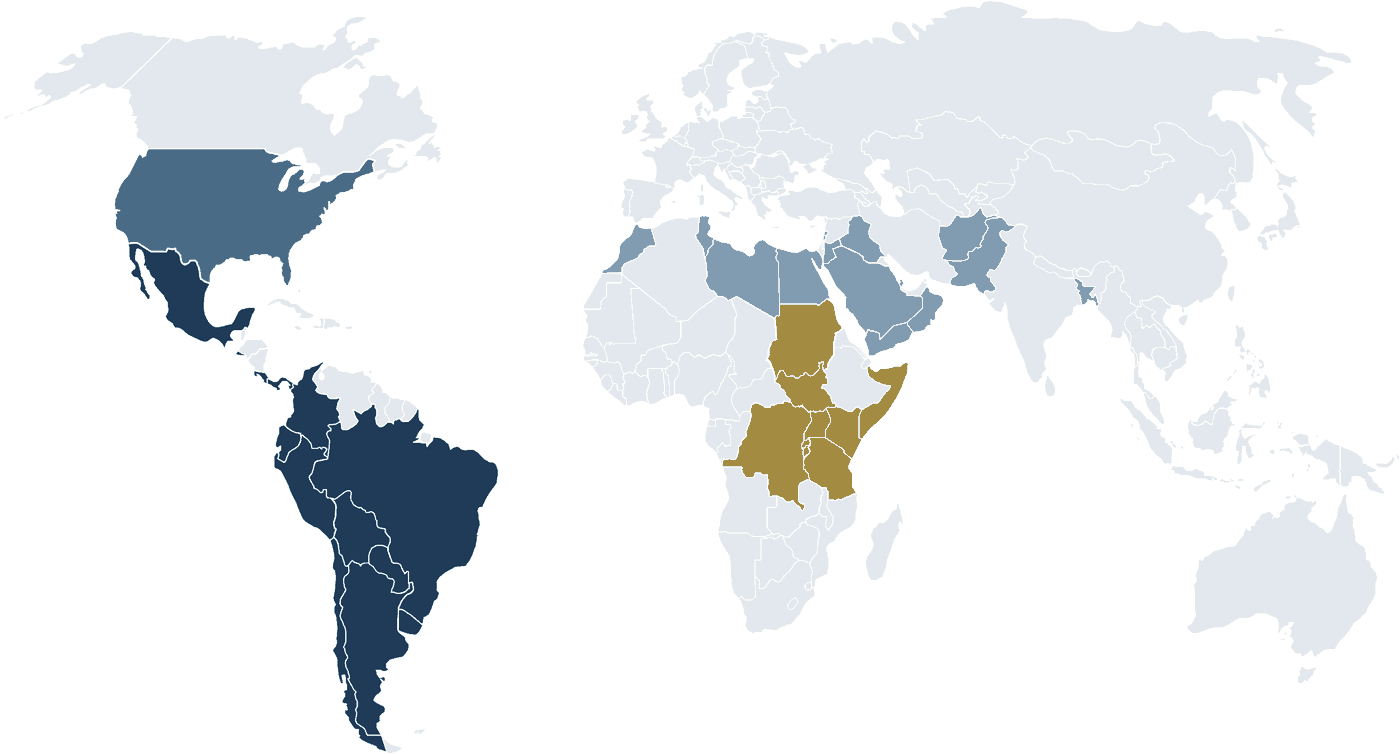
World map showing the countries involved through HFA's regional hubs in
                North America, Latin America, the Middle East and North Africa, and East
                Africa.
Countries involved through HFA's four regional hubs.

Current status, September 2026. Four regional hubs are active. HFA's founding instruments have been drafted and are before the Steering Committee for review; they take effect on ratification. Public health institutions in more than thirty countries take part through the hubs.

What HFA is

Health forecasting has advanced quickly, but the capacity to do it is spread unevenly across regions. HFA exists to close that gap by connecting networks that already work on forecasting and outbreak analytics, so that methods, tools, computing capacity and expertise circulate between them rather than accumulating in a few institutions.

HFA is a network of networks. Its members are institutions and regional hubs, not states. Each hub keeps its own governance, its own priorities and its own relationships with the countries it serves; HFA connects them and supports their work.

HFA claims no mandate

Responsibility for public health rests with national public health institutions, with regional bodies, and with the World Health Organization. HFA holds no such mandate and does not seek one. It works in support of the institutions that do — to strengthen their capacity, not to duplicate it, supersede it, or speak in their place. Participation involves no transfer of sovereignty.

Outputs inform decisions; they do not direct them

Forecasts produced through HFA are inputs to judgement. Responsibility for any decision taken rests with the authority that takes it. HFA offers no warranty about future events, and no member assumes liability for another member's decisions.

Federated by design

Hub autonomy is structural rather than a matter of goodwill. Nothing in HFA's instruments displaces a hub's own charter or established practice, and where they differ on a matter internal to that hub, the hub's instruments govern.

Our work

HFA's priorities are set by its Steering Committee and carried in a work plan that is revised as circumstances change. What follows describes how the work is done, the components it is organised into, and the threats it is currently applied to.

The obstacle, and the way around it

The obstacle to collaborative forecasting has rarely been method. It has been that the data cannot move — for reasons of law, of sovereignty, and of patient privacy that are entirely legitimate. HFA is built so that the data does not have to move.

Models travel to the data

There is no central repository of primary national data, and there will not be one. Models are trained and run locally, on infrastructure the data holder controls. What is shared between partners is anonymised model parameters and the resulting insights, using established privacy-preserving methods. A member is never required to share data as a condition of taking part.

The cycle of work

Each stage belongs to someone. Priorities are set together at the start; the data never leaves the authority that holds it; the decision at the end belongs to the government taking it; and what is learned returns to the next round of consultation rather than ending there.

  1. Consultation on priorities Jointly determined, not received.
  2. Data Held under national or regional sovereignty, and staying there.
  3. Analysis and modelling Carried out at hub and national level.
  4. Intelligence Made transparent and actionable.
  5. Decision and response Authority rests with each government.
  6. Reflection Joint, published, and carried forward.
  7. Reflection carries into the next round of consultation. The cycle is continuous, and HFA's accompaniment does not stop at the point of decision.
How work moves through HFA, and back to its beginning.

Outputs that can be interrogated

A forecast that a health official cannot question is a forecast they cannot responsibly act on. HFA works with explainable methods, so that the reasoning and the data behind a prediction can be examined by the people who have to use it. HFA also publishes how its forecasts performed: a body that asks authorities to act on predictions has to show what those predictions were worth.

Built on shared public infrastructure

The technical work follows digital public infrastructure principles for health data exchange, so that what is built in one region can be adopted in another instead of being rebuilt from nothing.

One Health throughout

Human, animal and environmental health are studied together rather than separately, an approach generally described as One Health. The threats HFA is most concerned with cross species and borders, and they cannot be forecast well by looking at people alone.

The five components

The work is organised into five components. They describe work rather than standing bodies, and each one covers the stages of the cycle it serves rather than owning a stage of its own.

Which component covers which stages of the cycle
ComponentStages served
Community of Practice The space where reflection and consultation happen Every stage
Federated Analytics and Model Exchange Standards, architecture, model exchange Data, analysis, intelligence
Advanced Computational Capacity Shared platforms and access Data, analysis, intelligence
Support to Decision- and Policy-Making Translation, uncertainty, briefs Intelligence, decision, reflection
Capacity Building and Knowledge Integration Continuous accompaniment Every stage

Access is not determined by ability to pay

Computing capacity is where equity in this field most often fails in practice. Access to the infrastructure HFA provides or brokers is not determined by a region's ability to pay for it.

Current use cases

Work is organised around threats the hubs have prioritised together: dengue, yellow fever, antimicrobial resistance, and highly pathogenic avian influenza. Each is taken forward by a team drawn from more than one region.

What is developed is shared

Methods, models and tools developed through HFA are held for the benefit of its members and the wider public health community, and are openly licensed by default. Anything a member brings with it remains the member's own.

Regional hubs

Hubs are HFA's operating centres. Each is constituted under its own arrangements and describes its own work; the descriptions below are deliberately brief, and each links to the hub itself.

  • ECLIPSE Latin America

    Led by Fundación Ciencia & Vida. Grew out of the South American community of practice on forecasting and outbreak analytics.

  • InsightNet North America

    A network-constituted hub. HFA's principal link is through the Johns Hopkins University Center for Outbreak Response Innovation.

  • MENA Collaborative for Forecasting and Outbreak Analytics Middle East and North Africa

    Formed with the Eastern Mediterranean Public Health Network (EMPHNET), the Center for Research and Development, and regional partners, across twelve countries.

  • East African Community East Africa

    Working through the regional body and the national public health institutions of its partner states.

HFA recognises one hub for each region, and a region may be represented by a network rather than a single institution. Regions not yet represented are welcome to make contact.

Governance

HFA is a collaborative association of institutions. It is federated by design: the arrangements below exist to make hub sovereignty structural rather than a matter of goodwill.

Who decides

A Steering Committee holds strategic and financial authority — the work plan, the budget, allocation of resources to hubs, and the appointment of the Executive Director. Each regional hub holds a seat. Academic and technical partners hold seats as a class, capped at one third of the total, and decide among themselves who occupies them. Funders take part through a forum and do not vote. No institution is represented twice.

A Scientific and Technical Advisory Group advises on method and screens proposed use cases against ethical criteria published in advance. Technical judgement is not subject to direction by any funder, member or governing body, and dissenting scientific views are recorded rather than settled by weight of numbers.

A Global Coordinating Body, led by the Executive Director, carries out the work.

  • Steering Committee Decides the work plan, the budget, the allocation of resources to hubs, and the appointment of the Executive Director. Each hub holds a seat.
  • Scientific and Technical Advisory Group Advises the Steering Committee on method and screens use cases against published ethical criteria. Advises — does not decide
  • Funder Forum Where funders are consulted on direction and report on their support. No vote
  • Global Coordinating Body Carries out the decisions of the Steering Committee, led by the Executive Director. Executes

Who holds what

  • University of California San Diego, Herbert Wertheim School of Public Health — Host Institution. Executes the Steering Committee's decisions and holds the legal and fiduciary obligations that cannot be delegated.
  • Vital Wave — Coordinating Partner. Provides coordination and technical capacity on an interim basis, until the Global Coordinating Body is sufficiently established.
  • Johns Hopkins University, Transform Health, Universidad San Sebastián — academic and technical partners.

Conflicts of interest

Interests are declared before a matter is considered and entered in a register open to the public. On decisions about resources, a member with a direct institutional interest may take part in the discussion but withdraws from the decision.

Review

Every instrument carries a review date. The first cycle is twenty-four months, and thereafter no longer than thirty-six. An independent evaluation of HFA's work is commissioned at intervals of no more than three years.

Documents and registers

HFA rests on a set of written instruments. They are listed below with a short account of what each one settles, and with its present status. A document appears here as adopted only once the Steering Committee has adopted it, and a superseded version is replaced rather than left alongside its predecessor.

Founding instruments
InstrumentStatus
Charter Establishes HFA, states its purpose and commitments, and defines membership and the conditions of participation Before the Steering Committee
Governance Framework Sets out, for each class of decision, who decides, who advises, who is consulted, and who executes Before the Steering Committee
Steering Committee terms of reference Composition, seats, the conduct of meetings, and how officers are selected Before the Steering Committee
Scientific and Technical Advisory Group terms of reference Scientific independence, the recording of dissenting views, and the ethical screening of use cases Before the Steering Committee
Working groups and use case teams terms of reference How technical work is constituted, and how a group is opened and closed Before the Steering Committee
Statement of Participation What a joining institution accepts, and what it does not Before the Steering Committee
Strategic work plan Components, priorities and sequencing, revised as circumstances change Before the Steering Committee

Registers and reports

The register of declared interests, the annual performance report, and the independent evaluation of HFA's work will be published here as each falls due. The annual report states what proportion of HFA's funding is restricted, and to what.

Institutions reviewing HFA that require the current drafts before publication are invited to write to info@hfaglobal.org.

Participate

HFA is open to regional networks, national public health institutions, academic bodies and technical organisations working on health forecasting and outbreak analytics.

Joining means accepting the Charter, naming a representative, and taking part in the community of practice. It does not mean transferring data, ceding any decision to HFA, or adopting its instruments in place of your own — where they differ on a matter internal to a hub, the hub's own instruments govern. Members may leave on notice.

Regions without a hub, and institutions wishing to join an existing one, are equally welcome to make contact.

Funders

HFA welcomes support and constrains its influence by design: funders take part through a forum and hold no vote, restricted funding is reported annually, and no funder may direct technical judgement.

Contact

Enquiries are welcome at info@hfaglobal.org. It is the address for all correspondence: participation, collaboration on a use case, press, and requests for the current draft instruments.

Correspondence is handled by the Global Coordinating Body, hosted at the Herbert Wertheim School of Public Health, University of California San Diego.

Regional hubs

Enquiries concerning work in a particular region are often best addressed to the hub itself. Each hub is listed on the regional hubs page.